

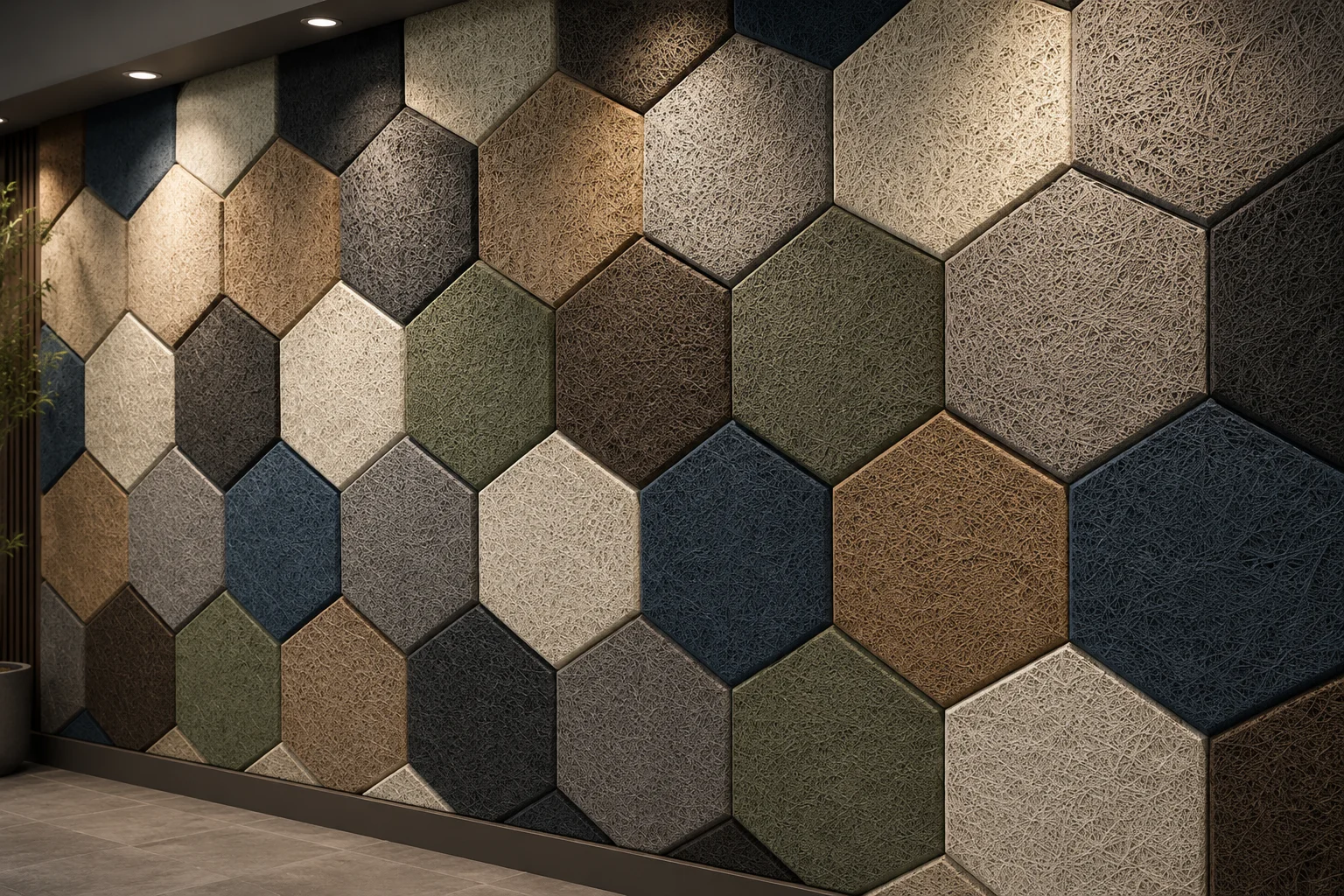
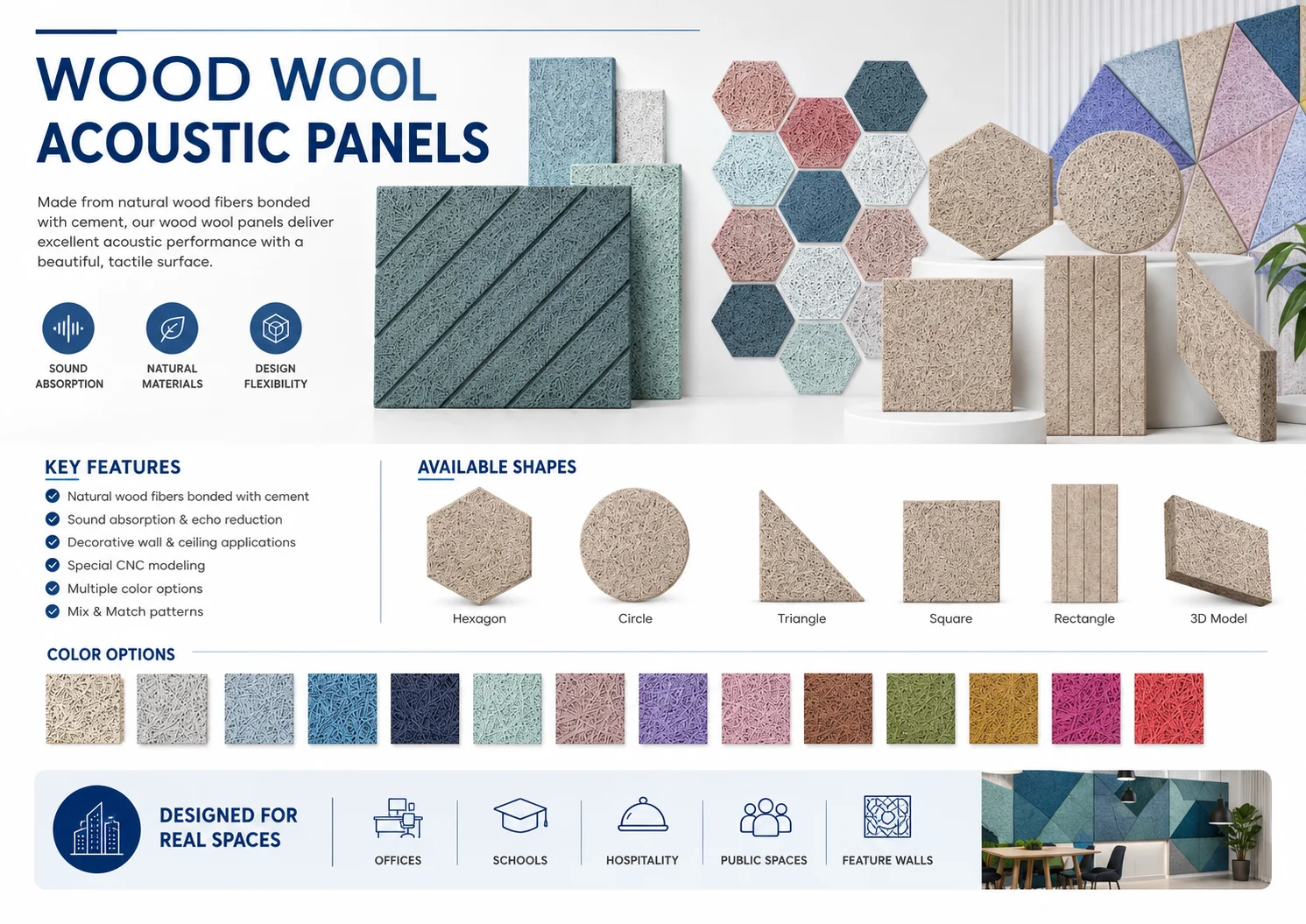
Acoustic Wood Wool Panels

Acoustic Wood Wool Panel Systems

Wood wool acoustic panels combine natural wood fibres with a cement-based binder to provide sound absorption, thermal performance, durability, and a distinctive architectural finish. They are suitable for wall and ceiling applications in commercial, educational, hospitality, public, and industrial projects.

Technical Specifications

Available in multiple thicknesses and densities to suit different acoustic, thermal, and architectural requirements.

  • Material: Wood wool bonded with mineral cement
  • Thicknesses: 15 mm, 25 mm, and 35 mm
  • Fire classification: B-s1,d0
  • Density options: 400, 450, and 570 kg/m³
  • Wood fibre width: Approximately 1.5 mm
  • Standard colours: Beige and grey
  • Installation: Direct fixing or suspended ceiling systems

Key Advantages

A durable acoustic material designed to improve indoor comfort while supporting demanding construction and design applications.

  • High sound absorption capacity for noise and echo reduction
  • High fire resistance
  • Environmentally responsible material composition
  • High vapour permeability
  • Good thermal energy storage capacity
  • Easy to cut using standard construction tools
  • Compatible with different construction materials
  • Suitable for cold and demanding environments
  • Resistant to insects and rodents

Recommended Applications

Acoustic wood wool panels can be used across a wide range of ceiling, wall, insulation, and architectural applications.

  • Suspended acoustic ceilings
  • Decorative acoustic wall panels
  • Shared walls between rooms
  • Ceiling and wall sound treatment
  • Thermal and sound insulation for floors
  • Non-removable construction moulds
  • Offices and meeting rooms
  • Schools and educational facilities
  • Restaurants and hospitality projects
  • Auditoriums and public spaces
  • Commercial buildings
  • Industrial facilities

Acoustic Performance & Design Flexibility

Wood wool panels feature an open fibre structure that helps absorb and diffuse sound energy, reducing reverberation, unwanted reflections, and echo within interior spaces. In addition to their acoustic performance, the panels offer considerable architectural flexibility and can be arranged in different sizes, configurations, and geometric patterns for distinctive wall and ceiling designs. Their durable structure also makes them suitable for demanding and high-traffic environments, including schools, public spaces, gymnasiums, sports facilities, commercial interiors, and other areas where acoustic control and design flexibility are both required.